Autumn’s Peak: A Journey to Geomundo Island 🍂⛴️
Tucked away off Korea’s southern coast, Geomundo Island isn’t the kind of place you can visit on a whim. Ferries fill up fast during the warmer months, and winter crossings are often canceled due to rough seas. Yet on a crisp autumn morning–the season at its zenith– I finally managed to carve out a window in the weather and set sail for this elusive island paradise. 🌤️🌊
Three Islands, One Timeless World 🌉🏝️
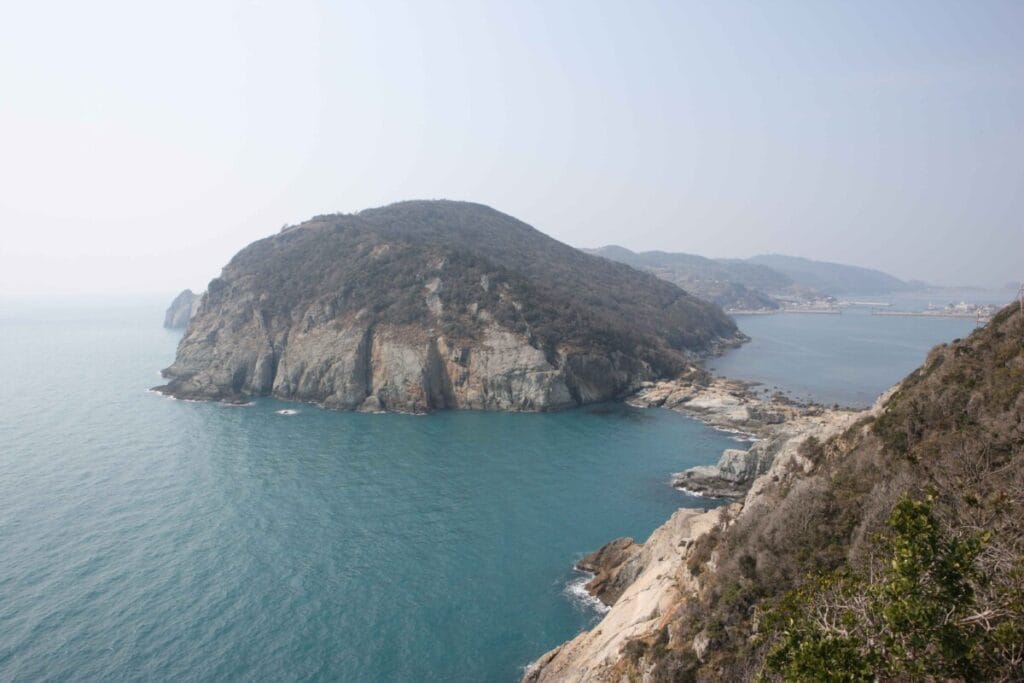
Geomundo isn’t one island but three— Seodo, Dongdo, and Godo — linked by the Geomun and Samho Bridges like pearls on a maritime necklace. Most of daily life unfolds on Godo, where ferries dock daily and inns, seafood restaurants, and small markets bustle with energy. It feels less like a remote outpost and more like a miniature harbor town frozen in time.🐚🍜
The three islands embrace a sheltered bay called Donaehae, forming a natural harbor that once offered refuge to fishing boats and merchant ships. In the late 19th century, this same strategic haven drew the attention of foreign powers. To the east, about 28 kilometers away, lies Baekdo, a cluster of small islets crowned with fantastically sculpted cliffs– a designated natural monument and a must-see for anyone venturing to Geomundo. 🏞️🚤
A Hiker’s Haven: Trails that Unfold the Island’s Soul 🥾🌿
The Seodo Ridge Trail, or Seodo Jimaek, is the island’s signature trekking route, rewarding hikers with cinematic coastal panoramas. The most popular course begins near Deokchon Village and winds toward the historic Geomundo Lighthouse, taking about five hours at a leisurely pace. 🌅✨
Trails here begin at sea level, making the first ascent the hardest– but every step upward brings expanding views. On clear autumn days, the Bultanbong Peak lookout reveals the entire island chain, with the turquoise sea glimmering between them. As you descend through camellia tunnels, the ground is already carpeted with fallen buds — a gentle reminder that even before full bloom, beauty finds its moment. 🌸🍃
At the ridge’s crest, Candlestick Rock signals the start of the open highland trail, where rugged cliffs drop dramatically to the ocean below. Here, every gust of wind carries the scent of salt and pine, and the world feels both infinite and intimate. On Geomundo, the island belongs to those who walk. 🌬️🪶
Stories by the Sea: An Island Shopkeeper’s Smile 🏪💬
At the heart of Deokchon Village, I stopped by a tiny shop with faded signage and shelves lined with timeworn goods. When I asked for instant noodles, the elderly shopkeeper squinted at the price tag and asked, “How much should I charge for this?” Her question carried both humor and a quiet truth — the challenges of island life, where even selling a single item can take weeks. As I left with my noodles and water, I couldn’t help but smile, reminded that travel is as much about encounters as it is about landscapes. ☺️💙
The Coastal Drama: From Clifftops to the Lighthouse 🌅🗺️
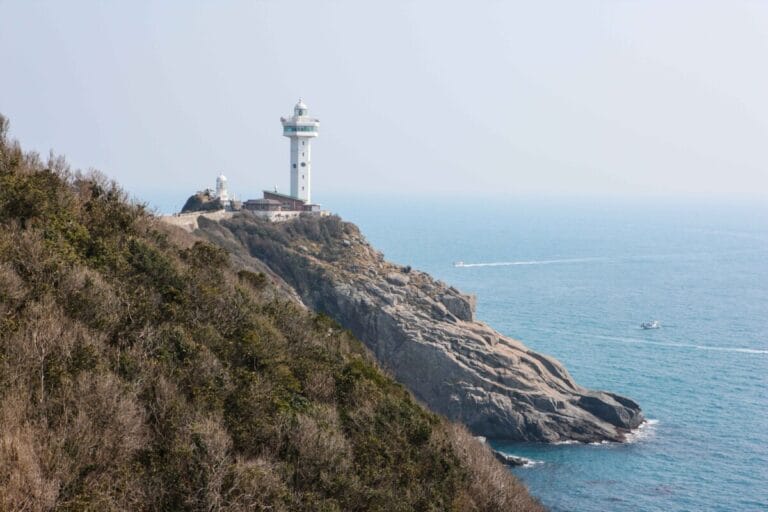
Beyond the stone houses lies Mollang Ridge — its name a local dialect for “mountaintop”. From here, the coastline unfolds in breathtaking sequence: the secluded Yurim Beach, the jagged Sinsun Rock, and the soaring cliffs of Suwolsan. 🌾🌊 At the farthest edge stands the Geomundo Lighthouse, built in 1905 as the first beacon on Korea’s southern coast. Today, a modern 33-meter tower rises beside the century-old original, now preserved as a monument to maritime heritage. Visitors can even stay overnight in nearby quarters and gaze toward distant Baekdo at dawn. 🕯️🌅
A Night Beneath the Moon 🌕🍶
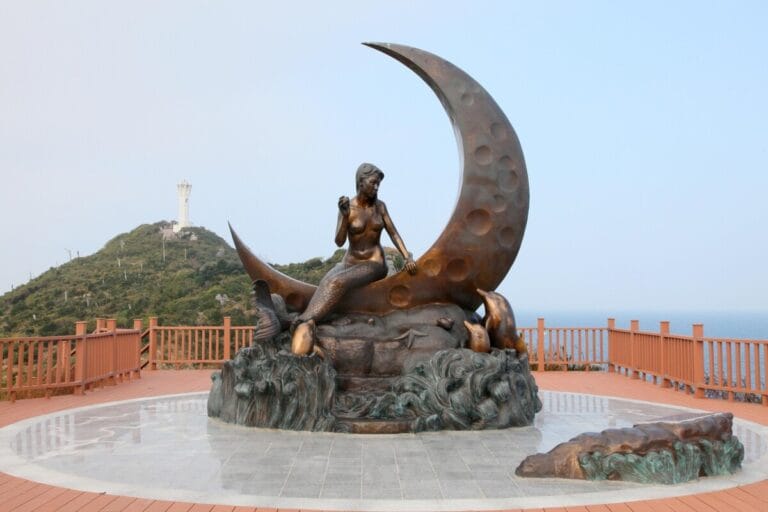
I had planned to reach Noksan Lighthouse the following morning, but the forecast warned of an approaching storm. Hunger won out over hesitation, and I made my way back toward Godo for dinner. Over a humble meal of grilled hairtail fish, a local woman asked if I’d found lodging. When I said I hadn’t, she smiled warmly. “Stay upstairs. Don’t worry about money tonight.” Kindness runs deep in places like this– quiet gestures that stay with you long after the tide recedes. 💫💛
Later, I pressed on to Noksan under the moonlight. The final stretch opened onto a wooden deck overlooking the Geomun Bridge, the moon suspended above Dongdo’s silhouette. Below, fishing boats shimmered like moving stars. I lay in my sleeping bag, unable to sleep, wanting to hold on to that fleeting perfection a little longer. 🌙✨
Two Gifts from Nature 🌿💎
Geomundo is known for two treasures: its breathtaking scenery and its famed sea breeze mugwort (haepung ssuk). This herb, grown in sea-salted air and volcanic soil, is prized for its deep aroma and health benefits–it’s become one of Korea’s most successful regional specialties. 🌾🍵
Behind Jangchon Village, entire hillsides sway green with mugwort fields. “This is our island’s treasure,” a farmer told me with a smile as I made my way back toward the ferry terminal. The island was stirring awake, ferries preparing to return to the mainland, and I realized that Geomundo had quietly gifted me something more enduring than photographs– a sense of stillness only the sea can teach. 🌊💭
Traveler’s Essentials 🧭🛳️
🛳 Ferries
From Yeosu Port of Nokdong Port, two daily services to Geomundo (approx. 2.5 hours).
🥾 Hiking Highlights
- Full Traverse ( 13 km / 7hrs): Geomundo Folk Song Museum -> Eumdal Mt. -> Bultanbong -> Mollang Ridge -> Sinsun Rock ->Borobong -> Suwolsan -> Geomundo Lighthouse
- Short Course (8.8 km / 5 hrs): Godo -> samho Bridge -> Deokchon Village -> Bultanbong -> Lighthouse Loop
🍴 Local Flavors
Try the hairtail set meal at Gangdong Restaurant — its side dishes alone could make a meal. 🐟🍚
🏠 Where to stay
Over 50 guesthouses and inns across the islands. For a touch of nostalgia, stay at Godo Guethouse, a remodeled 1925 Japanese-style home, or the Haepungssuk Lodge, ideal for groups. 🌇🛏️
Why Go 🌅❤️
For travelers seeking raw coastal beauty, unhurried rhythms, and a window into island life untouched by time, Geomundo is more than a destination — it’s an awakening. Here, the horizon isn’t just something you look at. It’s something you walk into. 🌊✨
By Minsu Kim | Photos by Minsu Kim | Edited by Seohui Kwak